
June 9, 2026 · Mikhail Vasiliev
Nexus Devlog: Ptolemy's cosmos and the star system generator
Over the past month I built two new simulations on the Nexus engine. Both are about space, but they solve different problems: Ptolemy's cosmos is about content, while the star system generator is about generation itself. I'll go through each one.
Ptolemy's cosmos
The first one is Ptolemy's cosmos, the Greek geocentric model of the sky. This is roughly how people pictured the universe in antiquity and the Middle Ages. Earth sits at the center, with the planets circling around it. Ptolemy didn't know what lay beyond Saturn, and the distant stars were thought to be fixed in place on a single sphere. To the Greeks the planets weren't just lights in the sky but gods. Without a telescope you can't tell them apart from the stars - except they move across the sky, which is why they were called wandering stars.
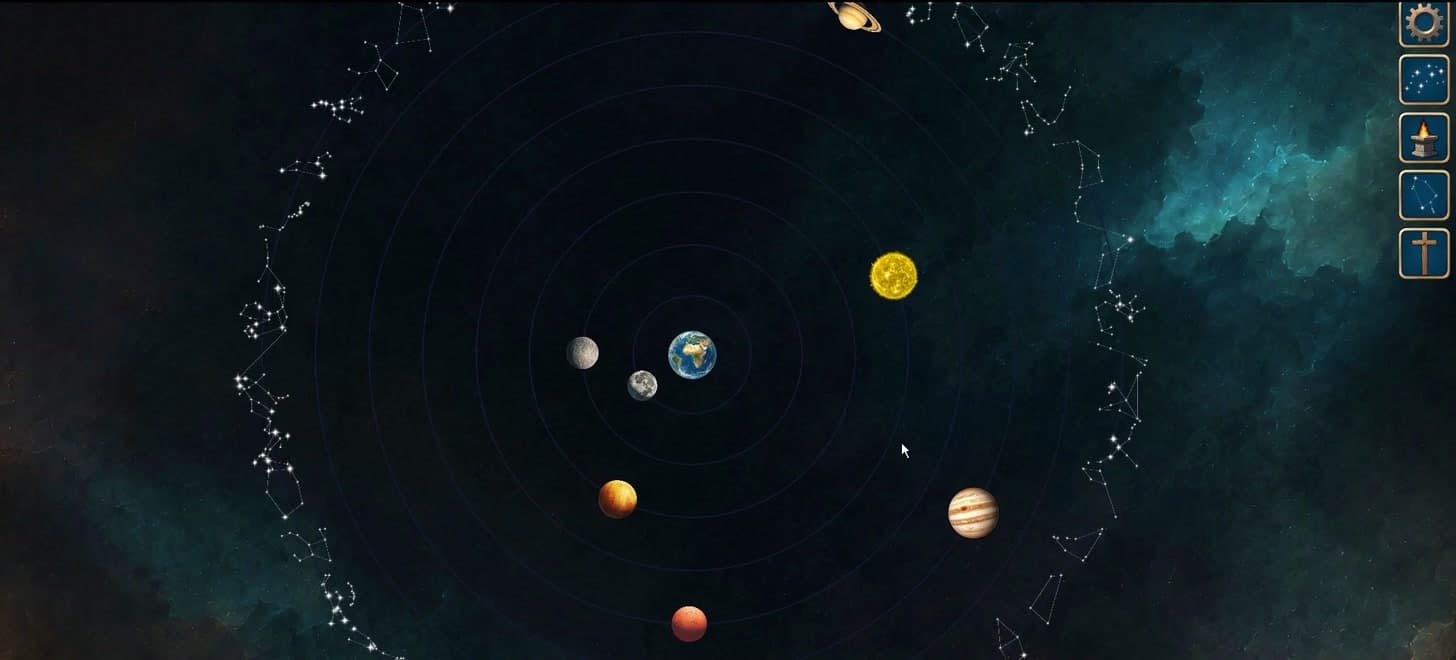
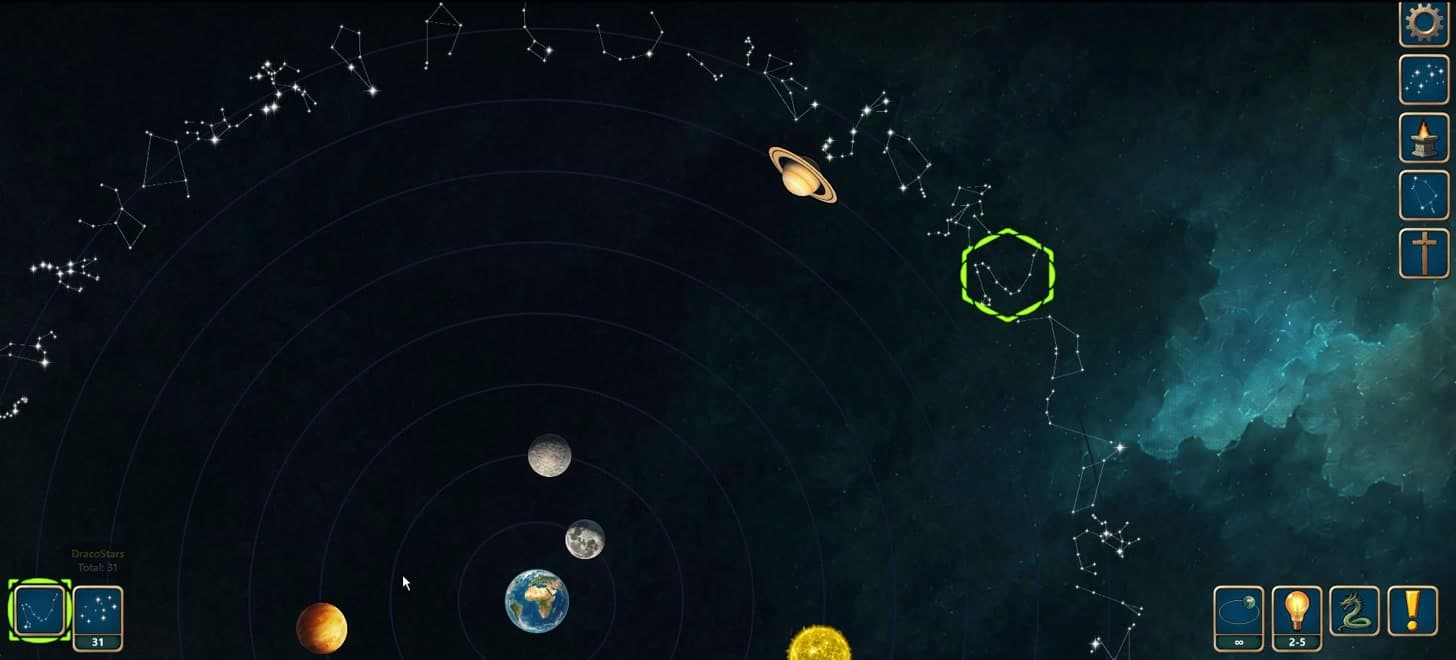
In the simulation you can click around and see how the ancient Greeks viewed the sky: the properties of the celestial bodies, the number of stars in each constellation, the myths tied to them. There are 48 classical constellations, and more were added over time. What matters for the engine is that the content can be anything - not only scientific but, say, about gods.
The star system generator
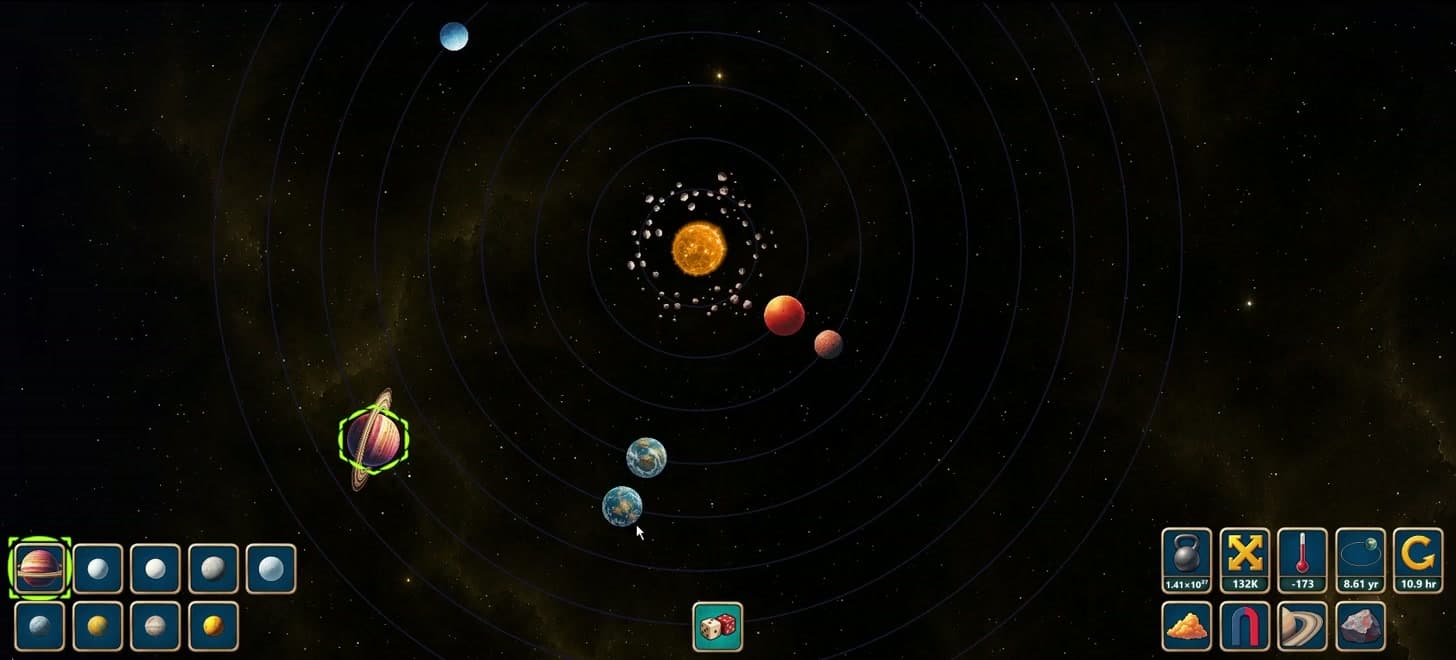
The second simulation is no longer about content - it's a serious upgrade to the engine. Here you can pick stars of different sizes and masses: from brown dwarfs, the smallest, roughly the size of Jupiter, up to class O giants, the largest stars in the universe. Dwarfs make small, cold systems - even the closest planets sit at around minus 35 °C on average. Around a class O star the worlds are large and very hot, up to three thousand °C. And around a star like our Sun you might come across an exoplanet where life has already appeared. Every run gives you a new system, endlessly.
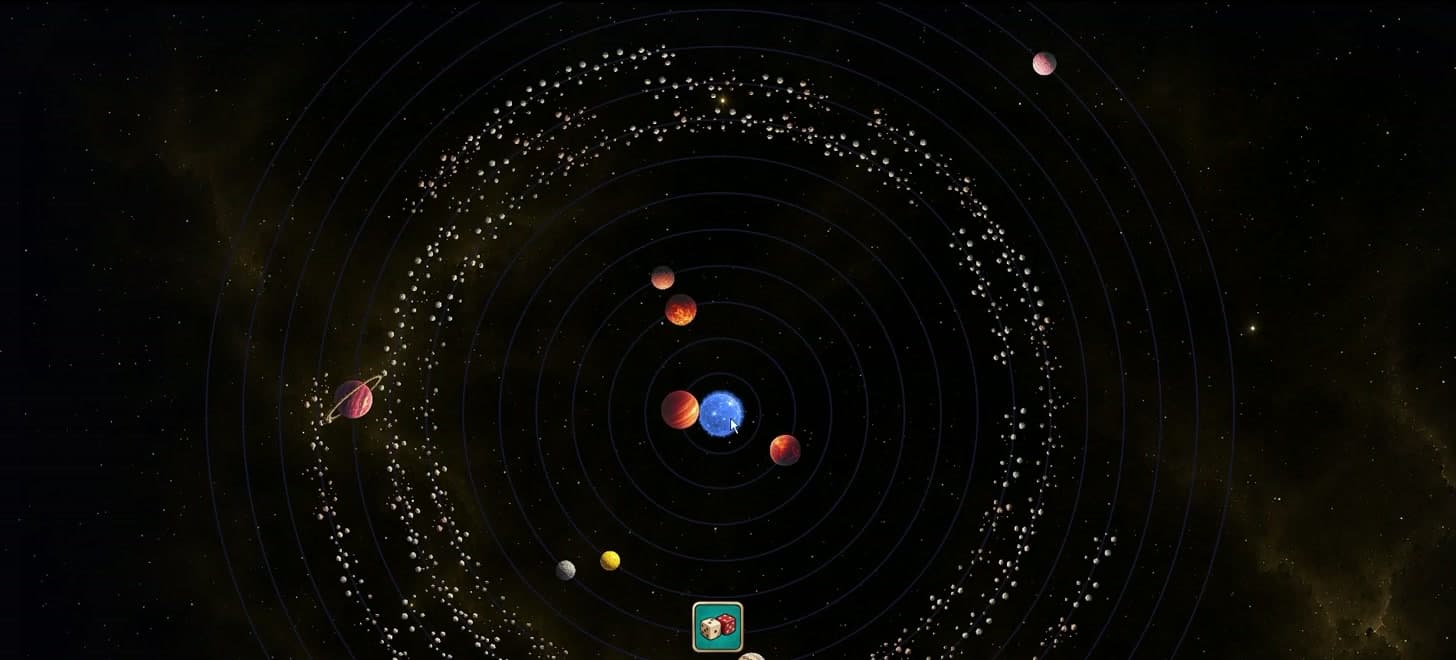
It's not just sizes and temperatures that get generated, but rings, minerals and the rest of the properties too - all of them close to real science and linked to one another. For example, if a planet has lots of minerals, that comes from active geology: volcanism and tectonics, which were in turn shaped by the star. Everything is connected. Working out all these properties and their combinations turned out to be the hardest part of this stage; I had to work through all of it carefully. But now the system doesn't have to be set by hand - the engine builds it from related rules on its own. The same approach can later generate not just stars, but whole worlds.
A simulation like this could come in handy for different genres: space strategies, travel in a sci-fi setting, future games in general. And just as a piece of popular science, too.
Plans
Quite a lot of the space side is already done - the graphics, the generation, call it half a game. So next I'm thinking of moving toward gameplay mechanics: adding strategy, assigning workers, that sort of thing. Basically bringing the engine closer to a full game engine.
I've put both simulations on the site - you can try them in the simulation catalog. More about Nexus and the plans in the Nexus section.