
About
Who We Are
Clarus Victoria is a small independent studio founded in 2013. We started with historical strategy games about Egypt, Greece, and the Bronze Age, and today we are exploring new forms of universal gameplay that merge strategy and RPG.
We care about details and authenticity, but we have never limited ourselves to history alone. The main goal is to build a game where the player is not bound by genre or script and picks their own role - a shaman of a fishing tribe, a science director of a lunar base, or a king of Mesopotamia.
Our History
2013 - Founding
It all started in 2013, when Mikhail Vasiliev founded the studio. The first project was Stone Age. For that first game he had to learn Flash-based browser game development, vector graphics, and animation from scratch. A free version launched in spring; by autumn came the mobile releases of Stone Age and the improved Bronze Age. That was the starting point.

2013–2016 - Growth
In 2014, Marble Age was released, a strategy game about the rise of a Greek polis. In 2016 came Predynastic Egypt, a game about the birth of ancient Egyptian civilization.
This was a period of growth and rising complexity. Mechanics grew deeper, the visual style more expressive, the player community more active. It mattered to us that history could be more than a backdrop - it could drive the gameplay itself.
That is why, when making Predynastic Egypt, we collaborated with scholars from the Center for Egyptological Studies of the Russian Academy of Sciences. This helped us verify facts, dig into details, and reflect real historical processes.
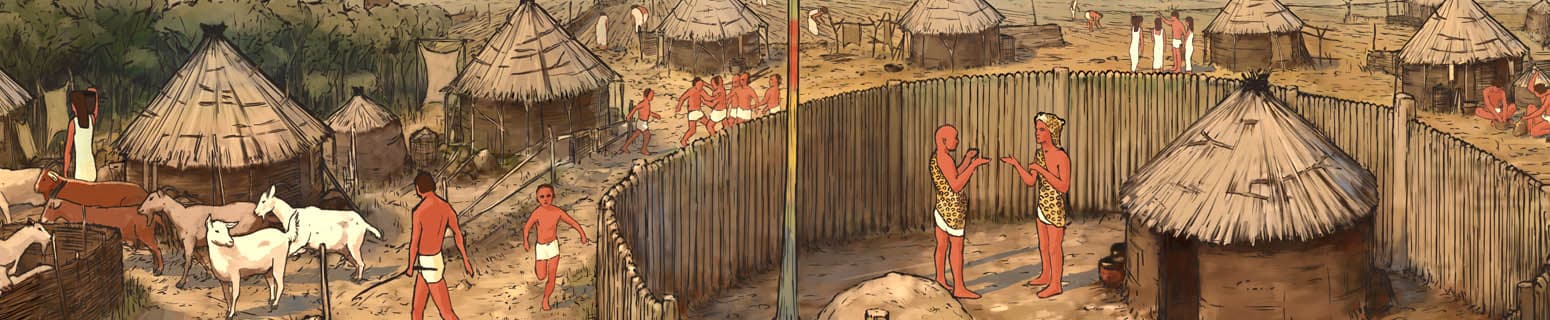
2016 - The Idea
In the final stages of Predynastic Egypt, Mikhail came up with the idea of universal gameplay - a system that combines different mechanics, genres, and settings, letting the player decide what to play.
The idea did not yet have a clear shape, but it was already taking root and partially finding its way into subsequent projects.

2017–2018 - Old Kingdom
The next step was the development of Egypt: Old Kingdom. Released in 2018, it brought together everything we had learned: deeper mechanics, attention to historical detail, and a visual style of our own.
For us it was a milestone. We set out to convey the scale of the Old Kingdom: building pyramids, growing Memphis, overcoming crises and droughts. Players noted this was no longer just a 'strategy about Egypt' but an attempt to capture the spirit of the era.
Over ten people worked on the project - both in-house and external specialists. It was the studio's peak: the largest team and the biggest release.

2018 - Turning Point
After Egypt: Old Kingdom we received not just support, but important feedback. Players said our games lacked variety and replayability. They wanted more diversity, the option to play different Egyptian tribes, and broader geography - Mesopotamia, China, Rus.
Those expectations matched our own internal search. After Predynastic Egypt we already had the idea of universal gameplay, but by 2018 it was clear: the old model had run its course. Moving forward meant stepping beyond familiar boundaries.
That was the start of a shift from classical historical strategies to experiments - searching for new mechanics, architectures, and formats that could become the foundation of a universal system for future games.

2018–2021 - Decline
After Egypt: Old Kingdom, the studio tried to move toward universal gameplay. New projects launched one after another: Egypt: New Kingdom, Primal Australia, Population, Adaptarium, Rome.
Each brought new ideas, but none became a finished game. Some hit dead ends in mechanics, others in maps; some concepts turned out too unwieldy. One by one, projects were shelved.
In parallel, almost without Mikhail's involvement, the team released Marble Age: Remastered (2020). Essentially, it was the last project of the 'old team.'
Resources ran out, the team fell apart. Mikhail continued working alone.
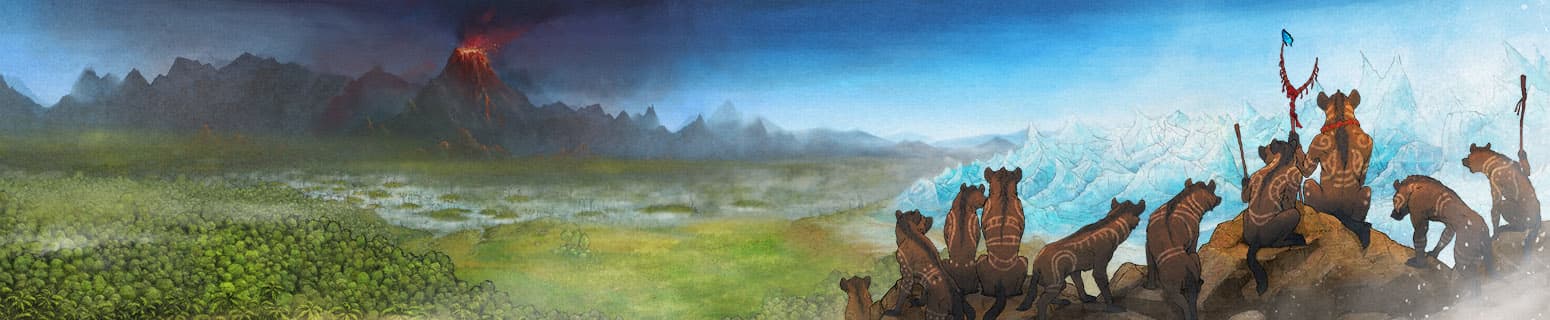
2021–2024 - Dark Age
Mikhail started from scratch and focused on fundamental work: analyzing dozens of games, extracting universal principles, and testing them in prototypes.
Most projects were shelved; huge volumes of work went to the archive. The only release was Flint Age (2022) - rough and unpolished, but an important step. To finish it, Mikhail used AI for graphics assistance for the first time.
A difficult period, but that was when the understanding of how a universal engine should work finally came together.
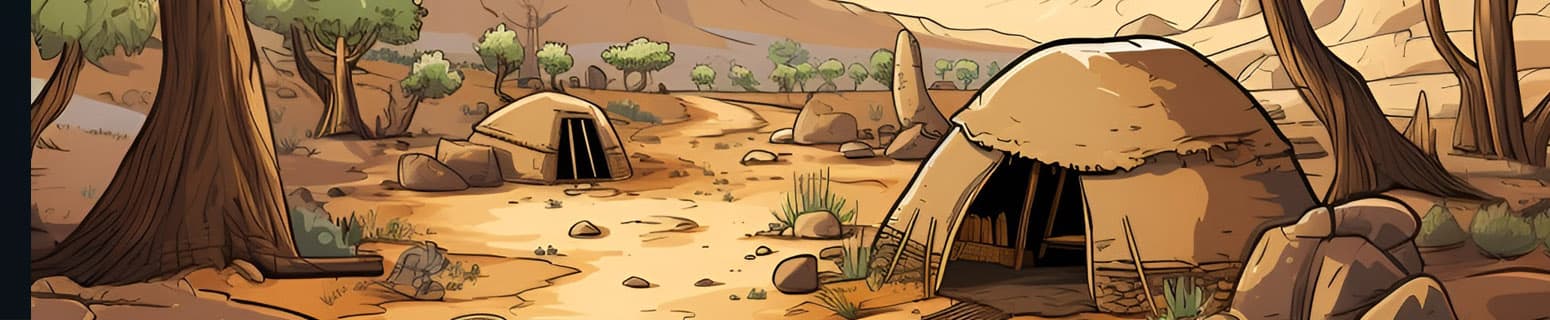
2024–2025 - New Era
Seven years of experiments came together in Next Run (2025).
The project chose an unusual genre for the studio - a strategic RPG - and a fantasy setting. It merged RPG and strategy mechanics: the player controls a hero while building a party, capturing and developing regions. The fantasy world made it possible to move beyond history and experiment freely with the map, creatures, and magic.
The engine architecture and world generation approaches refined during Next Run became the foundation for the next project - Nexus.

2026+ - Nexus
A new kind of game engine - knowledge and mechanics are described as data, not programmed. Any era, any role, any rules. The first simulations are already live on the site. More about the project.
Near-term goals: new simulations, engine development, and a return to historical strategies on a new foundation.